

The American Century, pt. 1 - Mass Society

Hi everybody. This series is about the history of the American 20th century. It will be thematic, rather than chronological, and will cover a wide variety of topics. It will consist of both essays and interviews with experts on different sub-topics, and I am open to suggestions for topics to cover and people to interview about them. I chose to start with this because the rise of the masses to social and political dominance is, I think, the necessary context for everything else that happens. I do not intend to harp on the point in future essays, but I’ll simply ask you to keep it in mind as we go.
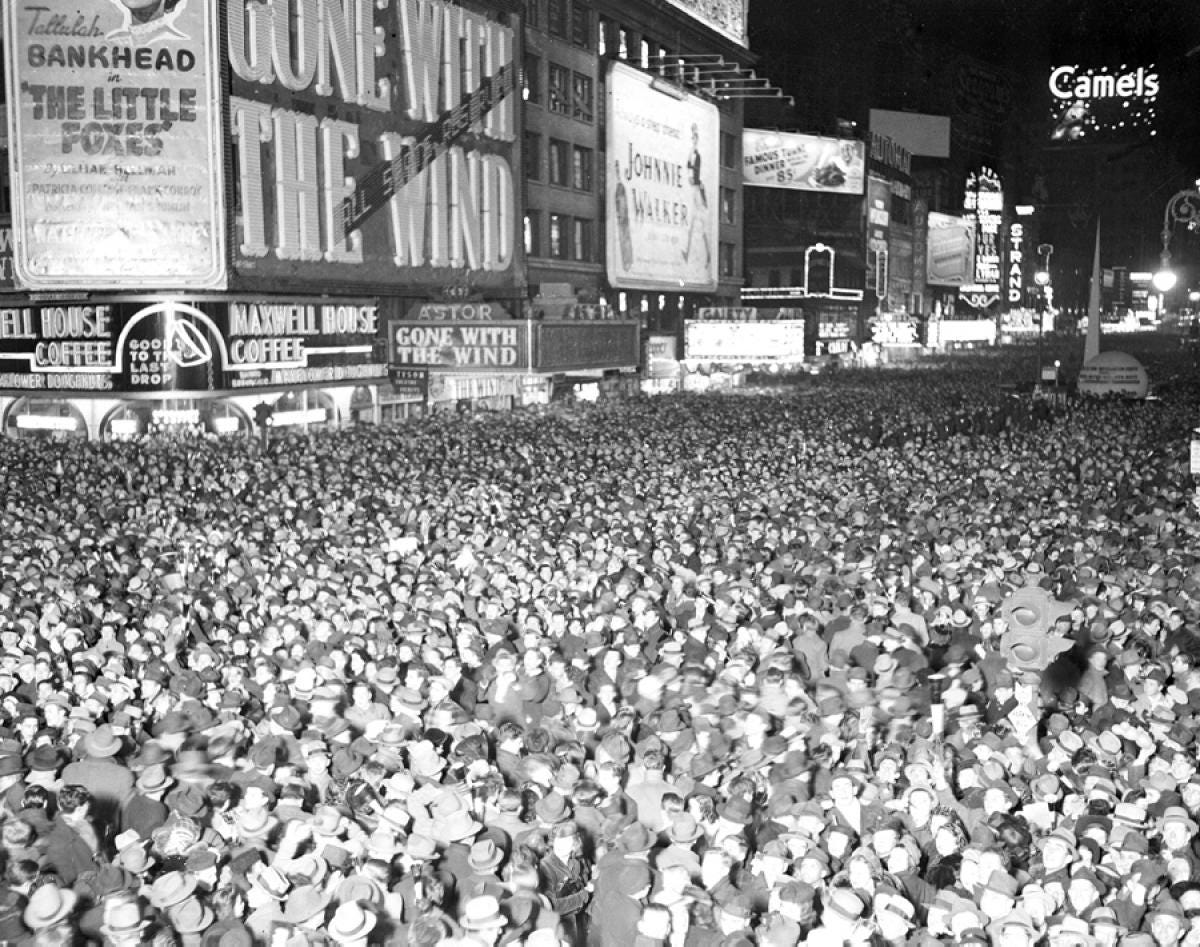
In 1932, as the Great Depression drowned the world economy and Stalin was systematically starving millions of Ukrainian and Kazakh peasants, one year before the second act of the Western world’s Götterdämmerung, the conservative Spanish philosopher José Ortega y Gasset wrote that the most important and consequential fact of the era was the rise of the masses to supreme power and authority in all areas of public life. By “masses,” the author simply meant the average man, together with those of his like, in all their multitudes. In his day, monarchs (what few were left of them) trembled before the masses, and those who survived the culling of 1914–18 did so only by subordinating themselves to the political demagogue, and accepting their new role as mere celebrities fit only to hawk products in the newspapers and magazines to which they bent the knee. Unlike European aristocrats, America’s ruling class elites had the advantage of plausible deniability, and they spent considerable time and effort pretending to be anything but what they were. The last generation of old American elites was laid in the grave of Nelson Rockefeller in 1979 (or, with George H. W. Bush in 2018, if you want to include newly minted elites who made their bones as employees of the old-school power brokers). Having lost the will to rule, they failed to train their children to take up the mantle, and instead let them be brought up on the same popular media that were shaping the minds of future proletarians, entertainers, and criminals. Imagine George H. W. Bush in his dotage, being treated in the same evening news program to the latest sex scandal of the petty conman who’d pushed him out of the White House, and a speech in which Bush’s own son, then governor of Texas, showed off the phony drawl he’d practiced to put the crowd off the scent of his Connecticut blue blood. Today, we are (one hopes) plumbing the final depths of this descent, as a reality show host wolfs down McDonald’s in the Oval Office and multi-millionaire politicians fall over themselves trying to show that they’re down with the struggle of the ghetto, the barrio, and whatever America’s newest arrivals are calling their neighborhoods. This phenomenon should not be taken to mean that the popular protest demand for “power to the people” has been fulfilled. The masses do not exercise power; they are the indispensable means by which power is exercised by others. The history of the twentieth century can be read as a competition between various factions over the right to call the tune to which the masses march. Those who saw the competition as undignified and refused to take part—monarchists and old conservatives like Ortega —were simply swept aside. From now on, politics would mean mass politics.
This was not a shift taking place beneath the surface, only to be noticed and analyzed in hindsight. In 1922, ten years before Ortega published The Revolt of the Masses, Walter Lippmann published Public Opinion, a book often deplored as an elitist manifesto (which it is), but one that holds up better than its reputation. The context for Lippmann’s book was America’s recent experience of the First World War. Having run for President in 1916 on the slogan “He Kept Us Out of War,” Woodrow Wilson brought America into Europe’s war just three months into his second term. He famously engaged Edward Bernays, the father of public relations theory, to help “manufacture consent” for American intervention. The phrase has long since escaped the confines of its original context. Today “manufacturing consent” is invoked almost reflexively as an accusation against governments, corporations, or the media whenever public opinion appears suspiciously uniform. Yet Lippmann’s insight, and Bernays’ practical application of it, were rooted in something much larger than wartime propaganda. They were responding to a new kind of society. The techniques they described would have been inconceivable in the eighteenth century, not because earlier rulers lacked the desire to shape public opinion, but because there was no public opinion in the modern sense to shape. There were populations, subjects, congregations, estates, villages, and guilds. There were mobs, riots, and crowds. But there was not yet a single national audience, consuming the same information, responding to the same symbols, and capable of acting in concert across an entire continent.
